 Bora Bora Snorkeling
Bora Bora House Reef Snorkeling vs Boat Tours
Bora Bora is the rare bucket-list island where the free option is genuinely good: most resorts stand over their own stretch of lagoon, the water off the bungalow deck holds reef fish and dawn stingrays, and the swim costs nothing. Bora Bora house reef snorkeling is the free half of that answer; the boats, at $115.21 to $174.00, sell the grounds the shore cannot reach - ray sandbars, blacktip shallows, the manta channel. This guide works the choice honestly: what a house reef delivers, what a boat adds, and the decision rules by length of stay - with the Bora Bora snorkel tours compared against the house reef one click away when the boat wins.
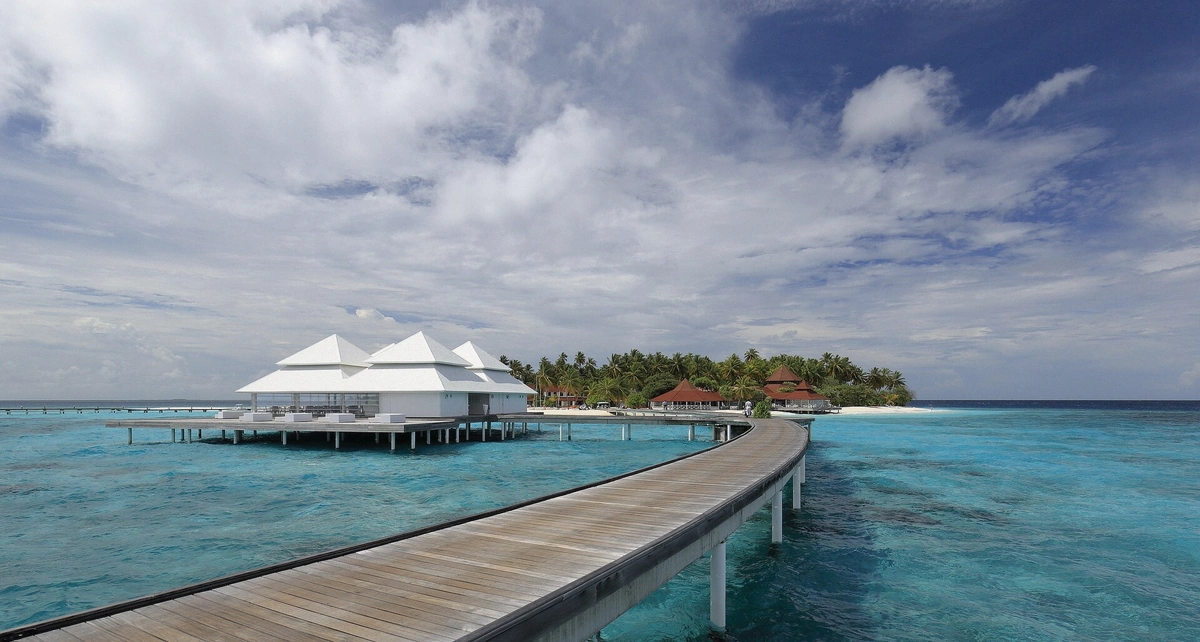
The house reef's office: bungalow decks over sand and coral heads - the free snorkel that starts this argument. Photo: Wikimedia Commons - see notes/commons-attribution.json. Illustrative photo: water villas, Maldives.
Quick answer What the free snorkel delivers, what the boat adds, and the stay-length rule that settles it
A Bora Bora house reef delivers a real, free snorkel: reef fish, coral heads and dawn stingrays in shallow, calm water a ladder's length from the deck. A boat tour ($115.21-$174.00) adds the grounds shores cannot reach - the ray sandbars, blacktip reef shark shallows, coral gardens and the manta channel. The rule that settles it: a week's stay wants both - house-reef dawns and one or two boat days; a three-night stay should spend one day on a boat and keep the rest free; no stay of any length sees a manta from a bungalow deck.
Key takeaways
- When the boat wins, pick it on numbers: the the complete Bora Bora comparison for resort guests runs every listing compared here side by side.
- First swim nerves start at the ladder: the shallow-water outrigger is the confidence boat.
The House Reef: What Free Actually Buys
The lagoon off a resort deck is the same water the boats sail - protected, bath-warm, and lit by the same sun - and the resorts sit on the best-access patches of it. A typical house reef holds coral heads and sand runs patrolled by damselfish, butterflyfish and the reef's permanent cast; dawn and dusk bring the stingrays cruising the shallows; and the water is one ladder away, on your schedule, at zero marginal cost. For children, nervous swimmers and jet-lagged mornings, it is not a consolation - it is the highest-frequency snorkelling you will do on the island.
How to swim a house reef well
The house reef rewards rhythm over range.
- Swim it at dawn - the windless hour when visibility peaks and the rays patrol
- Swim it twice at the same spot - reef fish restore themselves within hours, and the second pass shows you the residents
- Float the sand line between coral heads - the rays' road, and the safest place to stand and rest
- Ask the resort which direction the current drifts - every house reef has one, and the drift swim beats the lap swim
The honest ceiling
The house reef is a garden, not a landscape. No sandbar gathering of rays at scale, no eagle-ray schools, no manta channel - the grounds that made Bora Bora's reputation sit beyond swimming distance of every deck on the island, reachable only by boat. Travellers who end a week having never left the deck have seen a real, small piece of the lagoon; Lagoon Service's listings exist for the rest of it.
What Boats Add: The Grounds Beyond the Deck
The boat's product is distance: 10-30 minutes of hull between you and the grounds that need a hull. Each listing works a different slice of them - the shallow-water outrigger stays on the sandbar band, the manta routes run to the eastern channel edge, the full-days add the motu lunch hour. What they all add over the deck: numbers and scale - stingrays by the dozen, shark patrols, gardens measured in hectares, and the animals that never visit house reefs at all.
The boat catalog, by what it adds
Every listing in the comparison, mapped to what it delivers over a house reef. Figures: live-listing reads.
| Listing | From | What it adds over the deck |
|---|---|---|
| Moana | $115.21 | The ray-and-shark sandbar plus a garden - the shortest route off the deck |
| the H2O half-day | $130.00 | Four grounds including the manta stop, 7-guest boat, no-feeding route |
| the Rohivai half-day | $135.00 | Three grounds, fruit-and-drinks pacing, dock-to-dock transfers |
| the Lagoon Service tour | $135.00 | The steadiest hull, three shallow stops - the confidence boat |
| the Reef Discovery half-day | $137.95 | The manta ground at opening time, two gardens, the catalog's deepest review base |
| the Vavau cruise | $157.56 | A full island circle, four stops, motu BBQ lunch |
| the Rohivai safari | $174.00 | Six hours, three grounds, the motu picnic |
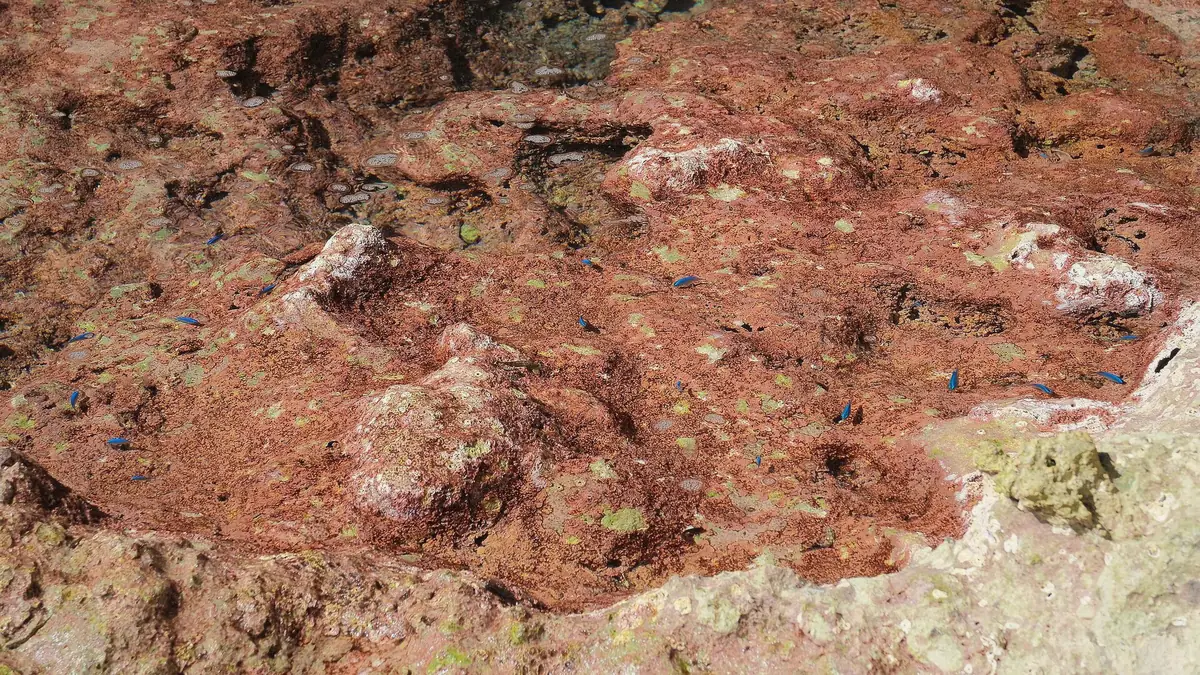
The house reef's cast: reef fish over the sand line - residents, not visitors. Photo: Wikimedia Commons - see notes/commons-attribution.json. Illustrative photo: damselfish in shallow water, Niue.
The Cost Argument, Worked Properly
The house reef's price is zero; the boat's price runs $115.21 to $174.00 per person. But the honest cost comparison is per-trip-per-stay, not per-swim: a five-night stay with two boat days spends $230-348 per person on water, against a resort bill that dwarfs it. The boats are also the cheapest activity-per-hour on the island - $115.21 for two and a half guided hours on the water undercuts the island's spa menu by an order of magnitude.
And every listing here carries free cancellation to 24 hours, which makes the boat the reversible expense and the missed morning the irreversible one.
Where the money actually goes
What each dollar buys, from Lagoon Service's listings' inclusions - gear, guide, transfers and (on the full-days) the meal are all inside the fare.
- The guide: a bilingual spotter and safety swimmer, the single biggest upgrade over deck snorkelling
- The grounds: ray sandbars, shark shallows, gardens and the manta channel - unreachable from shore
- The logistics: dock-to-dock transfers on every listing, gear and towels on most
- The meal: on the two full-days only - the half-days are water-pure
The Decision Rules, by Length of Stay
The argument collapses into stay-length, because the house reef's value compounds with days while the boat's value is a single great day. Three rules cover nearly every booking.
The rules
Stay-length decides the split; the stay's composition decides the boat.
- Three nights: one boat day, the rest house reef - pick the format that matches the swimmers: manta-first for confident adults, shallow outrigger for nervous ones
- Five to seven nights: two boat days (one half-day, one full-day with lunch) and dawn house-reef swims between - the combination almost every returning traveller describes
- Honeymoon rule: one boat day early in the week - it calibrates everything the resort sells you afterwards, and the photos outlast the champagne
The stay-composition shortcut
Honeymooners and adult pairs: the hard-capped small boats (the Reef Discovery half-day, the H2O half-day) fit the deck-to-deck rhythm of a resort week. Families: the family-format safari with fruit, drinks and dock-to-dock transfers. Cruise-day visitors: the ship-day formats - no house reef in the equation at all.
What Lives on a House Reef, Hour by Hour
A house reef has a timetable, and it is the reason resort snorkellers swear the lagoon is 'full of fish' while day guests sometimes miss them. Dawn is the reef's rush hour: the light is flat, the wind is asleep, and the sand between the coral heads holds feeding stingrays that cruised in overnight. Midmorning brings the reef fish at their busiest - the damselfish tending gardens, the wrasse working the coral - and the first winds that ripple the surface.
Midday flattens everything but the shade-seekers. And the dusk hour repeats the dawn cast with warmer light. Swim the reef against that clock and a week of free mornings out-delivers a hurried tour day; swim it at random and the reef reads as empty.
The house-reef clock
What to expect in the water, hour by hour.
| Hour | Water | Who is home |
|---|---|---|
| Dawn | Glass, coolest of the day | Stingrays on the sand, cruising blacktips at the edge |
| Midmorning | Calm, brightest light | Reef fish at full activity; photographers' hour |
| Midday | Warm, rippled | Shade fish under the coral heads; basking turtles on occasion |
| Dusk | Flat, golden | The dawn cast returns; the bungalow lights come on over it |
The cost ledger, worked for three stays
House reef versus boat days, priced at the comparison's live-listing fares. The boat column assumes the half-day formats; the full-days add the lunch hour.
| Stay | House reef | Boat plan | Boat spend |
|---|---|---|---|
| Three nights | Every morning, free | One half-day | $115.21-$138.00 |
| Five nights | Most mornings | One half-day + one full-day | $272.77-$312.00 |
| A week | Daily dawns | Two half-days, or one half-day + one full-day | $230.42-$312.00 |
When not to book a boat
Three days belong to the deck no matter how good the catalogue is. The jet-lag morning, when the body wants the water two metres from the bed and nothing else. The recovery afternoon after the full-day boat - sun debt is real and the reef is a gentle cure.
And the blown-weather day, when the fleet grounds and the house reef, inside its sheltered corner of the same lagoon, often stays swimmable. The season guide explains why the closed lagoon rarely closes: the houses' lee-side water is the last to roughen and the first to clear.
The Deck Snorkeler's Technique
A house reef rewards technique over distance, and the deck snorkeller who learns three moves sees more than a swimmer who covers a hundred metres. Enter down-current of your bungalow and drift with the lagoon's lazy flow rather than fighting it - the fish hold position in the current and a drifting swimmer reads as scenery. Stop at every coral head: the heads are apartments, and thirty seconds of stillness at each one brings the residents back out - the damselfish first, the wrasse behind them, and anything shy last.
And surface slowly: the lagoon's rays read a splash as trouble and a glide as a neighbour. None of this needs gear beyond the mask you already have; the house-reef clock supplies the hour, and the technique does the rest.
Feeding the fish? No - and what works instead
The classic resort mistake is rice or bread from the lunch buffet, and it harms exactly the show it tries to stage: fed fish change their grazing patterns, the algae they should be eating blooms, and the coral head's little economy tips. Feeding marine life is also on the wrong side of the same rules that banned shark feeding across French Polynesia in 2017 - the principle is habitat, not handouts. What works instead: stillness, which brings the curious; the dawn hour, which brings the rays; and a light-coloured swim glove or a plain hand held flat on the sand, which the bravest damselfish will investigate as a cleaning station.
The fish stay wild, and the encounter is better.
The two-reef week: a sample itinerary
The argument of this page, laid out as a week a returning traveller would recognise. It assumes the five-night ledger: house-reef dawns carrying the frequency, two boat days carrying the scale.
| Day | Water plan | Why this order |
|---|---|---|
| Day 1 | House reef, afternoon | Arrive, jet-lag swim; learn the reef's clock |
| Day 2 | Dawn house reef + half-day boat | First boat day while legs are fresh |
| Day 3 | House reef only | Recovery; the reef rewards the second visit |
| Day 4 | Full-day boat with motu lunch | The long day, midweek, weather chosen |
| Day 5 | Dawn house reef; spa afternoon | The dawn stingray shift, then dry off |
Where the House Reef Ends: The Map Logic
Draw the lagoon to scale and the tour-versus-deck question answers itself geographically. A house reef is a property line: a few hundred metres of resort-fronting sand and coral, swimmable end to end in fifteen minutes. The grounds the boats work sit across open lagoon water - the ray sandbars and their blacktip patrols, the hectare-scale gardens by the airport motus, the manta channel on the far edge - each ten to thirty minutes away by hull, each beyond any swimmer's round trip.
That is the whole map: the deck owns the nearest fraction of one per cent of the lagoon; the boats own the rest. The comparison is not between good water and bad water - it is between one address and the whole neighbourhood, and the grounds guide maps the neighbourhood.
Kids on the deck: the fifteen-minute program
Children turn house reefs into aquariums, and the format suits them if the adult plans to the child's clock rather than the tide's. Fifteen minutes in the water, warm shower, snack, repeat - that cycle, twice a day, delivers more fish-time than any single tour for a five-year-old. Equip for it simply: a mask that fits the small face - the single best pre-trip purchase - a flotation vest in a colour the child chose, and the rule the whole family swims by: fins off until the deep water, hands off everything alive.
The boat days still belong in the week; this is what the days between them are for.
The Fish You Will Meet by Noon: A Spotter's Dozen
A single morning on a house reef produces a cast list a marine notebook can hold, and learning a dozen names upgrades the swim from scenery to society. The residents: sergeant major damsels herding their purple egg patches, the indigo Picasso triggerfish chiselling urchins, butterflyfish in pairs, the nosy yellow tangs that follow swimmers like pilots. The hunters: a moray eel's head in its hole, fins flexing; the coral grouper pretending to be stone; the blacktip that crosses the sand line without breaking stride.
The locals' favourites: the octopus that is only ever seen after it has already seen you, and the mantis shrimp's morning bulldozer tracks. Name them once and every deck on the island becomes a recognisable neighbourhood - and the boat grounds become the place those neighbours' larger relatives live.
The case against overplanning
The house reef also punishes itineraries. The snorkeller who schedules the reef for 9:15 Thursday misses the stingray that works the sand at 6:50 and the eagle ray that crossed at 7:30. The format's entire advantage is adjacency - water a ladder away, repeatability a stay long - and a plan bolted onto it imports the boat day's rigidity without the boat.
The working pattern: pick the hour, not the minute; swim the same fifty metres twice; and let the week's two boat days carry everything the deck cannot reach. The comparison table prices those days; the reef's own price stays free.
The Quiet Hours: Dawn and the Last Light
Both ends of the house-reef day belong to the snorkeller who shows up. Dawn - the hour before the resort wakes - holds the glassiest water, the ray patrol on the sand line, and a lagoon so quiet you can hear the parrotfish crunch. The last light before dinner repeats the flatness with warmer colour, and the deck lights beginning to come on across the water mark the fish moving in under the coral heads for the night.
Neither hour needs planning beyond an alarm; both convert a good house reef into the reason travellers choose the room with the ladder. The boats cannot sell these hours - they are the one underwater show with reserved seating for guests only, and they are why a week of free swims belongs in every itinerary alongside its two paid days.
House Reef vs Tour: FAQ
Can you snorkel from your resort in Bora Bora?
Yes - most resorts stand over swimmable lagoon with sand, coral heads and resident reef fish, and dawn brings stingrays past the decks. It is a real snorkel and it is free; what it lacks is the grounds beyond the deck, which is what the boats sell.
Is a snorkel tour worth it if the resort has a house reef?
For one day of a multi-day stay, yes: the ray sandbars, shark shallows, coral gardens and manta channel all lie beyond swimming distance, and $115.21-$174.00 buys the guided version. The stay-length rule: three nights one boat day, a week two.
What does a boat tour add over shore snorkeling in Bora Bora?
Distance and scale: 10-30 minutes by hull to the grounds - stingray gatherings, blacktip patrols, hectare-scale gardens, eagle-ray schools and the manta cleaning station - plus a guide in the water and transfers included. The deck gives you the garden's fish; the boat gives you the lagoon's cast.
How much does a snorkel tour cost compared with the house reef?
The house reef is free with the stay; the boats run from $115.21 (2½-hour eco cruise) to $174.00 (six-hour safari with motu lunch), gear and transfers included, free cancellation to 24 hours on all seven. As activity spending on the island goes, the boat is the cheap ticket.
Which Bora Bora snorkel tour suits a resort day?
The half-days - four hours or less, back by lunch: the manta-first signature run for the best all-rounder, the outrigger for shallow-water confidence, the family safari for kids and mixed groups. The full-days suit days you are happy to hand over entirely.