 Bora Bora Snorkeling
The Best Snorkeling Spots in Bora Bora
The best snorkeling in Bora Bora is not one site - it is four grounds scattered across a lagoon roughly three times the size of the island, plus a scatter of house reefs in front of the resorts. Knowing which ground holds which animal, and how deep the water stands, is the difference between a good swim and the swim you came for. This guide maps the grounds the operators' own listings name, from the ray sandbars to the manta channel, then points each one to the boats that reach it - the Bora Bora lagoon snorkel tour comparison lines up those boats with live-listing figures.
The lagoon's reefs from above: the pale patches are the coral gardens, the dark channels the rays' roads. Photo: Wikimedia Commons - see notes/commons-attribution.json.
Quick answer The four grounds that carry the lagoon's snorkeling, what lives at each, and the one rule about reaching them
The best snorkeling in Bora Bora splits across four grounds: the shallow ray sandbars (stingrays and blacktip reef sharks in knee-deep water), the coral gardens near the airport motus (giant clams and dense reef fish), the manta grounds on the lagoon's eastern edge (a cleaning station mantas visit year-round), and the sandy eagle-ray flats off the southern shore. Every ground lies inside the barrier reef, none is reachable by road, and all are 10-30 minutes by boat - which is why the tour you pick matters as much as the spot you pick.
Key takeaways
- Depth decides the experience: the shallow-water boat for nervous swimmers versus the manta-ground boats is the first choice, not the brand.
- Resort guests can sample the lagoon free - the house-reef versus tour comparison works out when a boat earns its fare.
How the Lagoon Sorts Its Snorkeling
Bora Bora is a drowned volcano: the peaks of Otemanu (727 m) and Pahia are the caldera's rim, the lagoon fills the space between rim and barrier reef, and the motus stand on that barrier like pearls on a string. Water enters and leaves through passes - the deep gaps in the barrier - and the lagoon sorts itself by depth: pale sand flats at the edges, reef gardens on the shoals, sandy channels where the rays feed, and the deeper blue of the passes where mantas ride the current. Tahiti Tourisme's Bora Bora guide gives the geography the postcards miss; what follows is the snorkeler's version of the same map.
The four habitats
Every snorkel site in the lagoon belongs to one of four habitats, and each carries its own cast of animals. Match the habitat to the animal you most want to meet, then match the boat that visits it.
- Sand flats - knee to waist deep, blazing white, the stingrays' dining room and the blacktip reef sharks' patrol road
- Coral gardens - shallow reef on shoals, dense with clams, anemone fish and schooling reef fish
- Channel edges - deeper water along the manta grounds where the lagoon's plankton concentrates
- Motu shelves - the reef shelf that drops off the barrier islets, a mix of garden and sand in one swim
The access rule that decides everything
No road reaches any of it. The island's coastal road circles the mainland; every ground above sits across water that is either too deep, too far, or both - reachable only by boat, which the resorts' own concierges confirm with their price lists with their price lists. That is the quiet truth behind the lagoon's tour economy, and the reason which boat you book decides the water you see more than any other single choice.
The Ray Sandbars: Stingrays and Blacktips in Knee-Deep Water
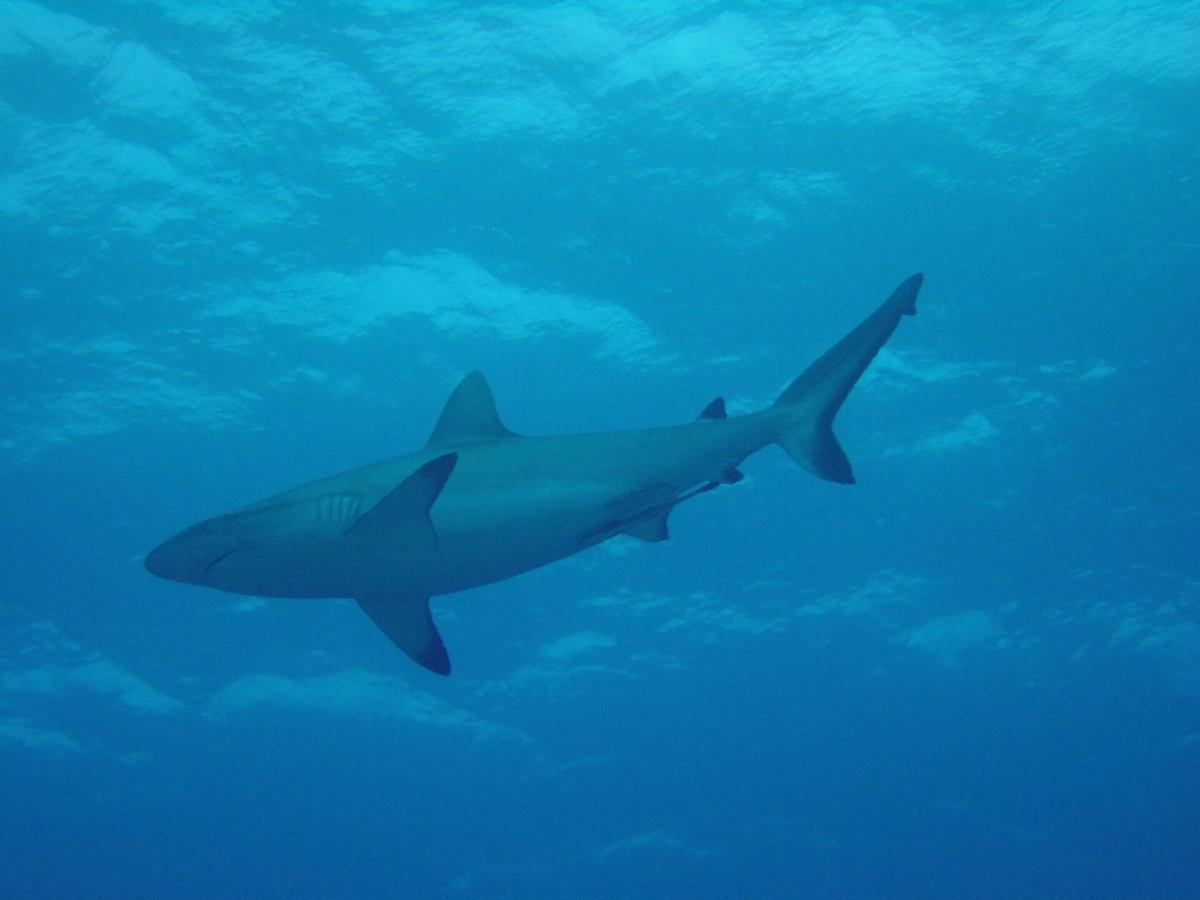
This is the stop every Bora Bora visitor can picture: white sand, water at knee height, stingrays gliding past your shins while blacktip reef sharks cross the deeper edge behind them. The rays gather because the warm shallow flats suit them - food-rich, predator-poor, and comfortable - and since shark and ray feeding became illegal in French Polynesia in October 2017, they meet visitors on their own terms. Guides keep the encounter ordered: stand still, hands closed, let the animals come to you.
Most departures in the comparison make this stop; the Moana eco cruise times it at an hour and forty minutes, the longest visit of any listing.
What you will see, hour by hour
Mornings bring the flattest light and the calmest water; the rays are resident, not scheduled. Blacktip reef sharks pass in ones and twos all day - they are small, cautious animals that keep their distance unless a guide points one in. Eagle rays sometimes cross the flats in transit; a full school is a deeper-water event.
- Stingrays - the residents; wingspans from half a metre to well over a metre across
- Blacktip reef sharks - patrol the sandbar's deeper edge; small, shy, endlessly photogenic
- Tropical fish - sardine shoals, sergeant majors and the odd triggerfish riding the flat's edge
The Coral Gardens: Clams, Neon Fish and the Clearest Water
The gardens - Lagoon Service's listing word for the shallow reef shoals near the airport motus - are where the lagoon shows off its clarity. Water over white sand and living coral in two or three metres of depth, giant clams embedded in the reef with mantles of electric blue and green, and schools of reef fish that part around swimmers and close behind them. Reef Discovery's route opens here after the manta ground, and reviewers repeatedly describe the gardens as the swim they stayed longest in; one traveller's phrase - clams, neon fish, straight out of an aquarium - recurs across platforms almost word for word.
Swimming the gardens well
The gardens reward slowness. Current through the shoals is mild but one-directional; the local technique is to enter up-current and drift the garden's length, with the boat following. Guides point out the small animals - cleaning stations, camouflaged stonefish, anemone cities - that a fast lap misses entirely.
Water shoes matter on the launch points, and the packing list the operators print covers the rest.
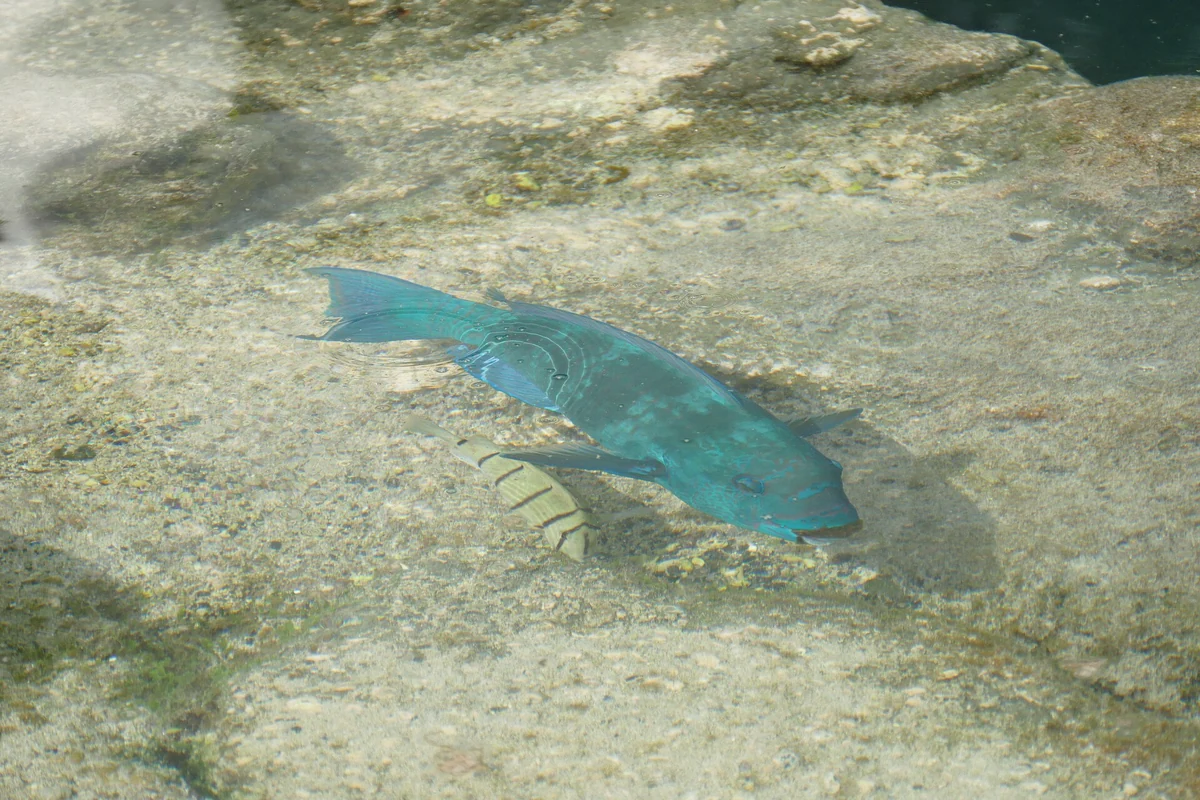
A parrotfish working the garden - the reef's gardeners, and the reason the coral stays clean. Photo: Wikimedia Commons - see notes/commons-attribution.json. Illustrative photo: blue parrotfish, Reunion.
The Manta Grounds: The Cleaning Station on the Eastern Edge
Manta rays visit the lagoon year-round at a manta ray cleaning station on its eastern edge - a patch of reef where small fish pick parasites off the mantas as they hover in current. Reef Discovery runs opens its signature route at what its listing calls the manta ray feeding ground, first thing in the morning; H2O runs a manta stop set on the day's conditions; reviews across both operators describe mantas holding position for minutes at a time, wings beating slowly, close enough to watch the remoras ride. The water here is deeper - swim comfort matters - and no operator promises a manta, which is the honest grammar of wild animals.
Odds, timing and etiquette
Mantas are lagoon residents rather than migrants, but sightings run in runs - plankton conditions bring several animals together, and reviewers describe days with a mating ballet of eleven and days with none. The etiquette the guides enforce: stay at the surface, never chase, let the manta's line cross yours. Boats that reach the grounds: the Reef Discovery half-day (opening stop) and the H2O half-day (conditional stop), both compared in Bora Bora's snorkel boats compared before you book.
The Eagle-Ray Flats: The Schools on the Southern Sand
Off the main island's southern shore, sandy flats run out toward the barrier reef, and spotted eagle rays feed across them in groups - H2O's crew calls its run through here the Eagle Ray playground, and reviewers describe a fever of 20+ eagle rays lifting off the sand in formation. Eagle rays are skittish in a way stingrays are not: they lift and glide when a group approaches too fast, which makes slow swimming the whole game. The flats sit between the gardens and the sandbars, so most half-days cross them; H2O's crews that name the stop - H2O especially - treat it as a destination, not a transit.
How the schools work
Eagle rays feed nose-down in the sand, tails trailing, in groups from a handful to dozens. The lift-off, when the whole group rises at once, is the lagoon's great sight. Guides read the water for the pale shadows of feeding groups and set the boat up-current so swimmers drift through the school's line rather than chasing it.
House Reefs: The Grounds You Already Booked
The lagoon's fifth snorkel is the one in front of your room. Most resorts sit over sand and coral heads with a swimmable house reef, and at dawn - before the wind - the water off the decks is glass over fish. What house reefs lack is scale: no manta channel, no ray school, no reason for a boat.
The full argument lives in the house-reef versus tour comparison; the practical summary is that a week's stay wants one of each - the free dawn swims off the deck, and one or two boat days for the grounds above.
The five grounds, one table
Every snorkel ground in the lagoon, with its depth, its cast and the boats that reach it. Figures from the operators' listings.
| Ground | Depth | Who lives there | Reached by |
|---|---|---|---|
| Ray sandbars | Knee to waist | Stingrays, blacktip reef sharks | Every boat in the comparison |
| Coral gardens | 2-3 m | Giant clams, reef fish, octopus | the Reef Discovery half-day, the H2O half-day, the Lagoon Service tour, the Rohivai half-day |
| Manta grounds | 4-8 m | Reef mantas at the cleaning station | the Reef Discovery half-day, the H2O half-day |
| Eagle-ray flats | 2-5 m | Spotted eagle ray schools | the H2O half-day, the Reef Discovery half-day |
| House reefs | 1-2 m | Reef fish, dawn stingrays | Free with your resort stay |
The Grounds, Mapped
The lagoon is small by ocean standards and large by swimmer standards - 10 to 30 minutes between grounds by boat, and every route runs inside the barrier reef.
- Vaitape Main village and departure point on the west shore
- Ray sandbars Shallow flats a short run west of the main island
- Coral gardens Shoals near the airport motus on the eastern barrier
- Manta grounds The eastern channel edge, where the cleaning station sits
Shore Snorkeling: What the Beaches Actually Give
Public shoreline snorkeling on the main island is the lagoon's weakest format, and it is worth saying plainly: the coastal road runs along the island's less-protected shore, the shallows off public beaches hold sand and seagrass rather than coral heads, and the ferry and ski traffic works the same band. A visitor with one afternoon and no boat booking will still get wet - the public pontoons and docks hold resident fish within a length of the pilings - but the postcard water begins where the boat run ends. The honest shore strategy is the resorts': the house-reef experience belongs to guests, and the house-reef economics explain why hotels can give the water away.
If shore is the only option
Three realistic ways to get in the water without a tour booking.
- Public docks and pontoons - resident reef fish within metres; swim off the sandy edge, not the boat lane
- A resort day pass - several resorts sell pool-and-lagoon passes that include water access; ask in the village, not by email
- The half-day compromise - a four-hour outrigger run covers what a shore day cannot, and still ends by mid-afternoon
How Operators Sequence a Morning: The Two-Ground Logic
The grounds are fixed points on the map, but the sequence is a craft. Operators read three variables before the first briefing: the wind's direction, which sets which shore holds the calm water; the tide, which sets when the manta channel runs cleanest; and the fleet, which sets how crowded each ground will be at each hour. The result is the two-ground logic every route here follows: wildlife first, when animals feed and boats are few; gardens second, when the light has risen enough to reach the coral.
Understanding that logic turns the comparison table into a schedule - and explains why Reef Discovery's manta-first run and Moana's sandbar-first eco cruise can both be right for the same lagoon on the same morning.
The three variables, in H2O's crew's order
What the skipper checks before the engine starts.
- Wind and lee shore - the day's stops slide to the protected side of the lagoon; rain does not move them, wind does
- Tide and current - the manta channel cleans up on the push; the gardens hold their clarity longest on a slack morning
- The fleet - eight boats can share a sandbar; forty cannot. Crews that know the fleet's rhythm feed you uncrowded water
Sequencing compared, in one table
Route order across the comparison's half-days, read from the live listings.
| Listing | First ground | Then | Format |
|---|---|---|---|
| the Reef Discovery half-day | Manta feeding ground | Two coral gardens, eagle-ray search | 3 h 30, 8 passengers |
| the H2O half-day | Set daily by conditions | Manta, garden, eagle rays, wild card | 3 h 30, 7 travellers |
| Moana | Shark-and-ray shallows | Coral garden | 2 h 30, 12 travellers |
| the Lagoon Service tour | Ray sandbar | Blacktip stretch, garden | 4 h, outrigger |
Snorkeling the grounds responsibly
The grounds carry thousands of swimmers a season and read the difference. The responsible snorkeller's list is short: sunscreen that biodegrades, fins kept off coral - float neutral above it - animals met on their line rather than chased off theirs, and nothing taken; the shells, the coral and the anemone fish all stay. The operators enforce the same code from the deck, and the rule behind it has one hard law - the 2017 feeding ban - plus a culture that keeps the lagoon worth comparing.
The species-by-species etiquette lives in the shark-and-ray guide.
Reading the Water From the Boat: Three Signs
The crews read the lagoon the way sailors read weather, and a passenger who learns three signs watches the day make sense. First, the colour lines: where pale water meets deep blue, the sand shoal drops to the channel - the mantas' road runs those lines, so a boat holding a colour line is hunting mantas. Second, the birds: terns working a patch of flat water mark fish schools pushing bait, and the gardens' fish activity shows from a hundred metres as a faint dark cloud.
Third, the other boats: a cluster of hulls at one ground means the crowd is there and the hour is wrong, and H2O's crews that swing away to the quiet duplicate of the same habitat are the ones whose reviews read uncrowded. Watch for all three on any morning here and the route table stops being a schedule and becomes a conversation.
Bora Bora Snorkeling Spots: FAQ
Where is the best snorkeling in Bora Bora?
Split by what you want to meet: the ray sandbars for stingrays and blacktip reef sharks in knee-deep water, the coral gardens near the airport motus for clams and reef fish, the eastern manta grounds for mantas, and the southern flats for eagle-ray schools. The spots table matches each ground to the boats that reach it.
Can you snorkel from the shore in Bora Bora?
From the mainland's public beaches, honestly: no - the good water lies across the lagoon. From resort decks over their own house reefs, yes, and at dawn it is genuinely good. The one-line answer: shore snorkeling means a house reef, and house reefs mean a resort stay.
Where do you see manta rays in Bora Bora?
At the cleaning station on the lagoon's eastern edge, where mantas hover in current year-round while small fish clean them. the Reef Discovery half-day opens there on its signature morning; the H2O half-day sets a manta stop on the day's conditions. The full behaviour guide is manta rays and eagle rays.
Is snorkeling good in front of the overwater bungalows?
Often, yes - the bungalow rows stand over sand and coral heads with resident reef fish and dawn visits from passing stingrays. It is a real snorkel, just a small one: no boat replaces the sandbar-and-garden grounds, and the house-reef comparison works out when each wins.
What is the coral garden in Bora Bora?
The operators' shared name for the shallow reef shoals near the airport motus: two to three metres of water over living coral, giant clams in electric blues and greens, and schools of reef fish. Reef Discovery's route works two of them after its manta stop.
Do you need a boat to reach the best snorkel spots?
Yes - every major ground lies across water too deep or too far to swim from shore, reachable only by boat. The closest a shore-swimmer gets is a house reef, and the the spot-to-boat Bora Bora tour comparison shows how little the cheapest boat costs against a week's stay.
Turning the Map into a Booking
The grounds are fixed; the variable is your boat. Three realistic pairings cover most travellers: nervous or young swimmers take the outrigger's shallow-only three stops; the general best-day buyer takes the manta-first signature route that opens at the cleaning station; families on a clock take the four-hour safari with fruit, drinks and a dock-to-dock transfer. When the map and the boats are both in front of you, the all seven Bora Bora lagoon tours compared page is the table that finishes the argument.