Bora Bora SnorkelingIndependent Bora Bora Snorkeling Guide Check Availability

Bora Bora Snorkeling Tours: The Lagoon From the Inside

Bora Bora snorkeling tours put you in the water with the lagoon's rays, blacktip reef sharks and manta grounds - and the boats compared here differ sharply in group size, wildlife rules, lunch and price. Real from-prices, water time and cancellation rules, read from the live listings.

$115.21 lowest from-price
6 h longest water day in this comparison
5.0★ top verified rating, 1,034 reviews
Quick answer The one boat that wins on numbers, the price span, and the season that decides your water

For most travellers the Reef Discovery Half Day Group Signature Tour is the strongest Bora Bora snorkeling tour bookable right now: 5.0 across 1,034 verified reviews, a maximum of 8 passengers, 3 hours 30 minutes on the water, and $137.95 with towels, fins and drinks in the price. The catalog around it runs from $115.21 (Moana's 2½-hour eco cruise) to $174.00 (Rohivai's six-hour safari with a motu picnic), every boat carries free cancellation up to 24 hours before departure, and May to October brings the driest, calmest water of the year.

Key takeaways

The Tours, Compared Side by Side

The lagoon's listings, read directly from Viator and GetYourGuide and re-checked on a quarterly schedule. The from-price is the lowest adult shared-group rate the operator printed on Lagoon Service's listing when we read it - seasonal dates and private buyouts cost more. All seven carry free cancellation up to 24 hours before departure; ratings and review counts are the platforms' own verified-booking figures.

Signature Half-Day Snorkeling Tour

5.0★ across 1,034 verified reviews - the largest perfect-score base in this comparison, at a mid-pack $137.95

★★★★★ ★★★★★ 5.0(1,034 reviews)· 3 hours 30 minutes - morning departure

5.0 across 1,034 verified reviews - the biggest perfect-score base here. An 8-passenger fast boat with sun canopy opens at the manta feeding ground, then two coral gardens and an eagle-ray search; towels, fins and drinks included.

Cancellation
Free cancellation 24h

Bora Bora Snorkeling Tours: Price Comparison

Every listing side by side with the figures that actually change a booking: the from-price live on each listing, time on the water, the platform rating with its verified review count, and the traveller each boat suits. Every trip here carries free cancellation up to 24 hours before departure - the exact deadline is confirmed on each platform's checkout.

Trip From Duration Rating Best for Book
Our pick Reef Discovery half-day $137.95 3 h 30 min 5.0 (1,034) The safest all-round book Check Availability Details
H2O small-group half-day $130.00 3 h 30 min 5.0 (761) Strict no-feeding ethics Check Availability Details
Full-day lagoon cruise $157.56 6 hours 4.8 (715) Lunch day, cruise guests Check Availability Details
Eco snorkel cruise $115.21 2 h 30 min 4.8 (589) Budget and short stays Check Availability Details
Full-day lagoon safari $174.00 6 hours 4.9 (732) Polynesian motu picnic Check Availability Details
Half-day lagoon safari $135.00 4 hours 4.9 (233) Families with kids Check Availability Details
Outrigger lagoon tour $135.00 4 hours 4.9 (97) Nervous swimmers Check Availability Details
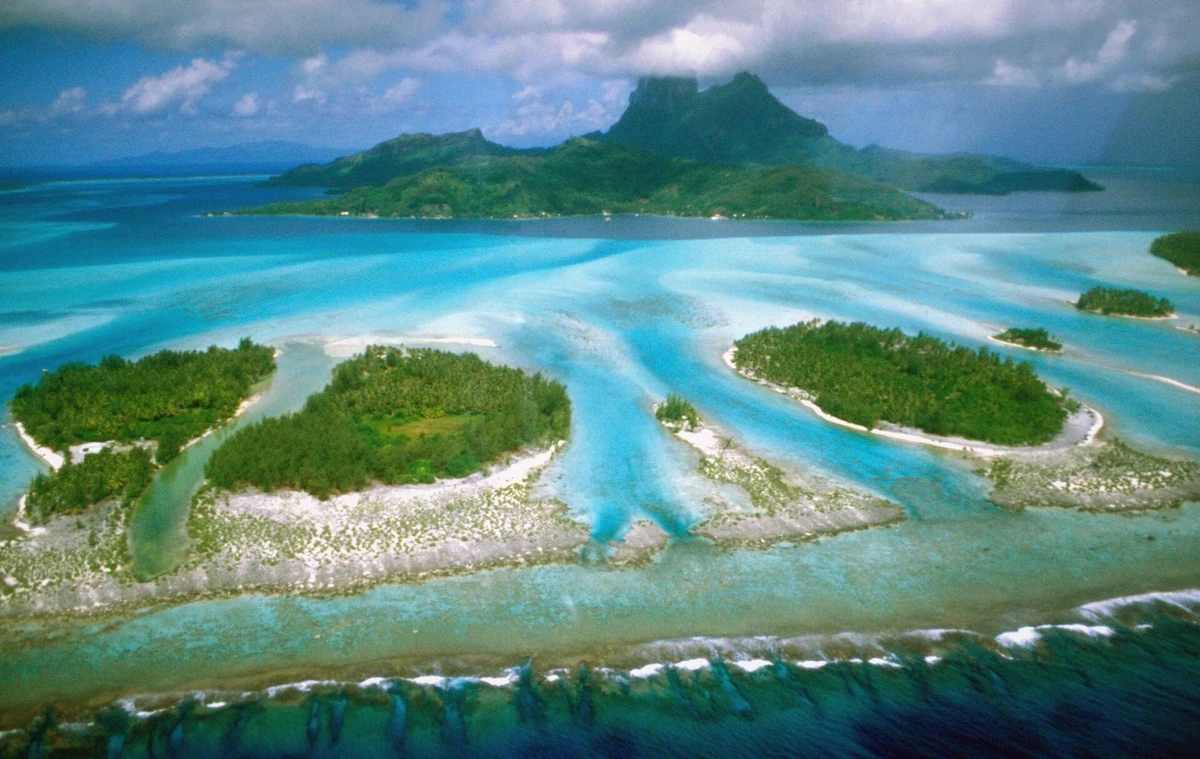
Mount Otemanu rising over the turquoise Bora Bora lagoon with a shallow sandbar in the foreground, French Polynesia

The water sorts itself into bands: deep indigo in the pass, turquoise over the sand, pale mint at the shoals. Boats read those bands the way you read a menu. Photo: Tb01, Wikimedia Commons (CC BY 2.0).

Where the Boats Go: The Lagoon's Snorkeling Grounds

Bora Bora is a drowned volcano: Mount Otemanu and Mount Pahia are the eroded rim, the lagoon fills the old caldera mouth, and a necklace of motus - white sand islets - stands on the barrier reef. The water inside that barrier is shallow, warm and mostly current-free, which is why a first-time snorkeller and a manta ray can share the same site in the same morning. Every boat in this comparison works the same lagoon; the difference is which grounds each crew favours and how long it lingers.

The four grounds every itinerary touches

Operators name their stops differently, but the map repeats. Four grounds carry nearly every departure in this comparison - and each has a distinct underwater character worth knowing before you choose a boat.

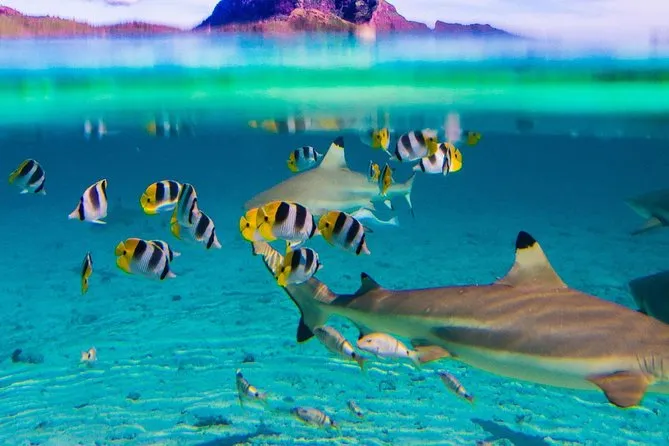
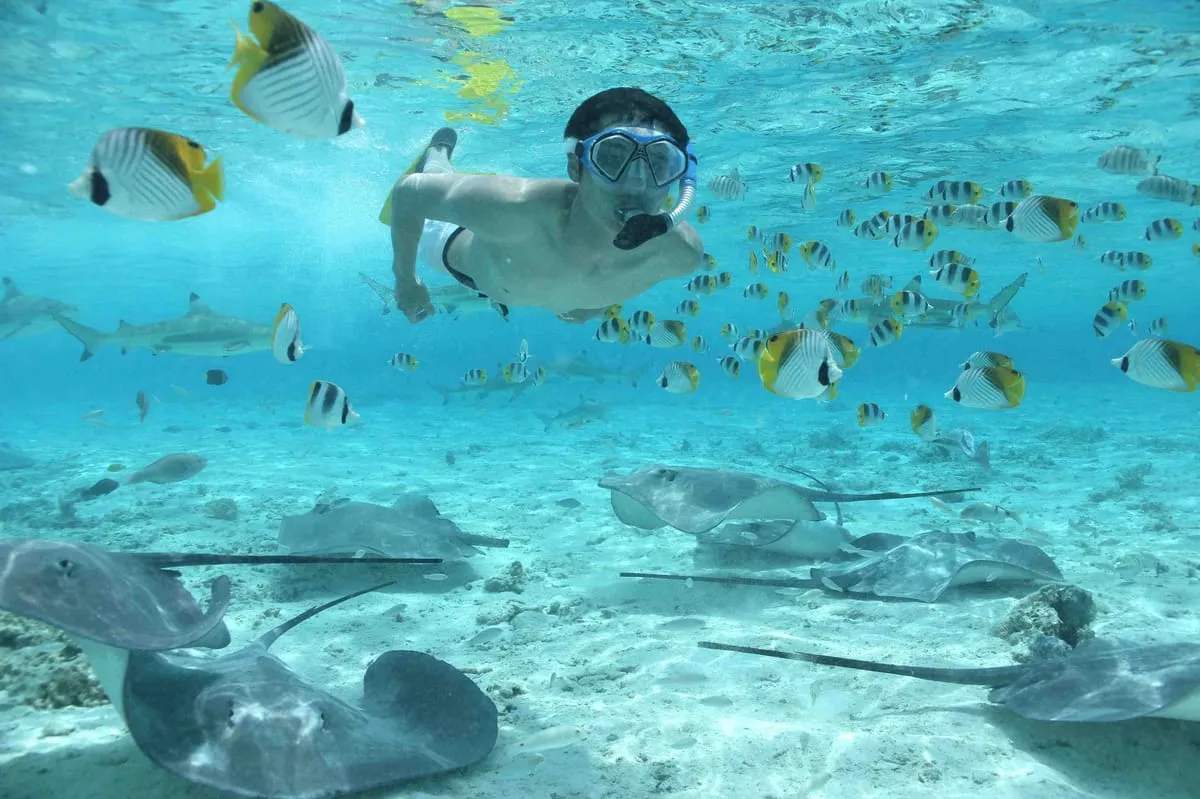
  • The ray sandbars - knee-deep white sand where stingrays and blacktip reef sharks stand in warm, waist-height water; the calmest first stop in the lagoon and the one every boat makes.
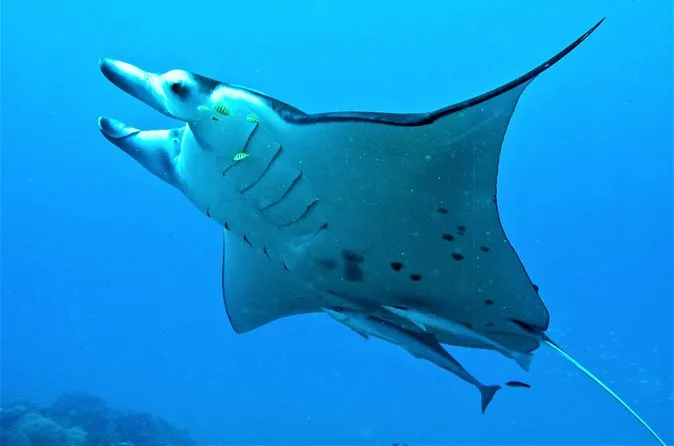
  • The manta grounds - Lagoon Service's listing word is the manta ray feeding ground - a deeper channel edge near the eastern lagoon where mantas pass over a cleaning station; Reef Discovery runs opens here on mornings when the tide allows.
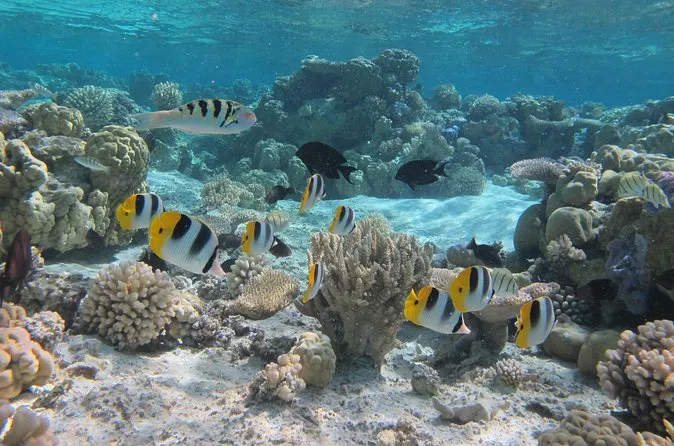
  • The coral gardens - shallow reefs near the airport motus, dense with giant clams and reef fish; the clearest water in the lagoon on a still morning.
  • The eagle-ray stretches - sandy flats off the main island's southern shore where eagle rays feed in groups; H2O's crew calls its run through here the Eagle Ray playground.

Why group size changes what you see

The lagoon's sites are small. A sandbar that absorbs eight swimmers for forty minutes starts shedding fins and sand when forty arrive, and the mantas keep their distance from churned water. That is the quiet logic behind the caps in this comparison - 8 passengers at Reef Discovery, 7 at H2O, 16 at the full-day Vavau cruise - and it is why the full Bora Bora snorkeling tours comparison puts group size next to price instead of burying it in a listing's fine print.

Crews that run small boats also move stops with the wind; a fixed-route boat loses that freedom.

The feeding rule that shapes every stop

One legal fact sits under the whole lagoon experience: shark and ray feeding has been illegal in French Polynesia since October 2017. The animals you meet are there because the sites suit them - warm shallow sand, tide-driven food, protection - not because a boat brought lunch. Lagoon Service's listing states that it also avoids every site where animals are still artificially drawn in, and Lagoon Service's listing puts feeding on its not-allowed list.

What that means in practice: encounters are close but on the animals' terms, and a good guide briefs the rules - hands in, no chasing - before anyone slides off the ladder.

Which Month Has the Best Snorkeling

The chart shows typical sea-surface temperature in the Bora Bora lagoon - the number your skin will actually notice after an hour in the water. What the thermometer misses: the rain. May to October is the drier, windier-still-calm trade-wind season when the lagoon sits at its clearest; November to April is the wet season, warmer air, brief heavy showers, and water that stays swimmable between them. Boats run all year - there is no closed season in the lagoon.

The Verdict: Late May to Early October

Chart read, the answer: the best snorkeling window in Bora Bora is late May to early October - the dry trade-wind season, when rain stays out of the forecast, the trade wind settles the surface, and the lagoon sits at its clearest. Inside that window the sweet spot is the two hinges: late May-June and September-early October, which sell the same water clarity as the July-August peak with thinner decks and calmer booking pressure. Mornings beat afternoons in every month of that window - first departures get the glassiest surface and the calmest crossings.

The ranking, compressed

One line per tier, so the chart turns into a decision.

  • Best overall: late May to early October - dry skies, settled trades, peak visibility
  • Best value inside the best: the two hinges (late May-June, September-early October) - peak water, thinner decks
  • Warmest water: February-March - 29 °C and wet-season prices, if greyer skies suit the trip
  • The rule that holds all year: book the morning; the season guide carries the month-by-month table

Why the dry season wins, in one breath

Visibility is plumbing, not luck: the dry months send less rain runoff into the lagoon while the steady trades flush it through the pass, so the gardens read like glass and the manta channel holds its blue. Add the year's most reliable schedules - every boat runs, every day - and the window earns its crown on three measurable grounds: clarity, calm and choice of boats.

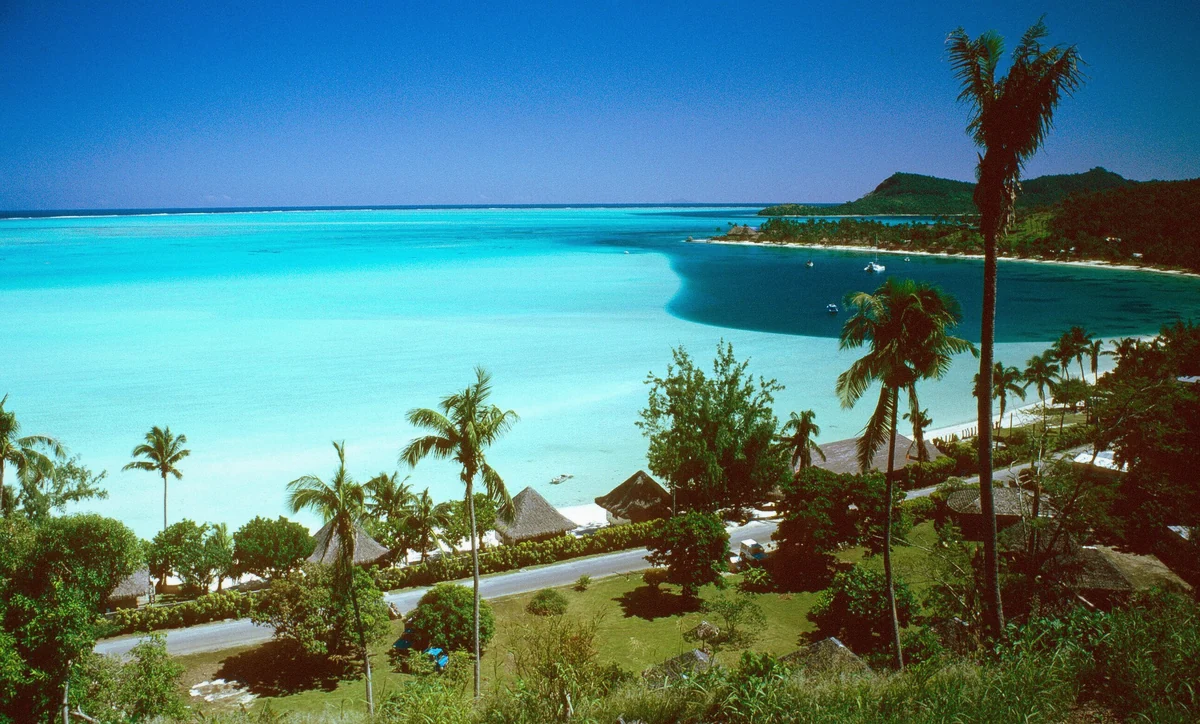
Matira beach with white sand and palm trees on the Bora Bora shore, French Polynesia

Matira, the island's public beach: the same shallow lagoon the boats work, straight off the sand. Photo: Wikimedia Commons - see notes/commons-attribution.json.

Do You Need a Tour, or Will the House Reef Do?

Bora Bora is one of the few bucket-list islands where the question is fair. Most resorts sit on their own stretch of lagoon, the water off the deck is swimmable, and some overwater-bungalow rows stand over a genuine house reef. The honest answer: a house reef is a real snorkel, and a boat trip is a different one.

They do not compete - they cover different water.

The two snorkels, side by side

One costs nothing beyond your stay; the others cost $115.21 to $174.00 per person. What the money buys is access to the grounds a shore cannot reach - the comparison in one table.

SnorkelCostWaterWhat you meet
House reef off the deckFree with your stayShallow, calm, right below the bungalowReef fish, often rays on the sand at dawn
Half-day boat (2½-4 h)$115.21 - $135.00Two to three lagoon grounds by boatRay sandbars, blacktip reef sharks, coral gardens
Full-day boat (6 h)$157.56 - $174.00Four-plus stops plus a motu beachAll of it, plus manta grounds and lunch

When the house reef wins

On rest days, jet-lag mornings and with small children who snorkel in fifteen-minute bursts. The lagoon off a resort deck is the same warm, shallow, protected water the boats sail in, and at first light - before the wind moves in - it is often glass. If your bungalow stands over sand and coral heads, you will not lack for fish.

What you will not meet from the deck is a manta: the manta grounds and the deeper ray channels sit out in the lagoon, reachable only by boat.

When a boat earns its fare

When meeting the lagoon's headline animals is the point of the trip. The ray sandbars, the blacktip reef shark shallows, the manta channel and the offshore coral gardens all lie beyond swimming distance of the resorts - the best snorkeling in Bora Bora is distributed across the lagoon precisely because the barrier reef, not the shoreline, builds the habitat. Travellers with a week on the island usually settle on one full-day boat and one short trip, and snorkel the house reef between them.

What a Day Beyond the Ticket Costs

The lagoon itself is free: French Polynesia charges no entry fee, no reef permit and no visitor levy for snorkeling inside the Bora Bora lagoon, and none of Lagoon Service's listings compared here here adds a local-payment surcharge - the platform price is the price. The figures below are the costs that do attach to the day, read from the same listings and official sources, re-checked quarterly.

Costs that attach to the day

Everything a traveller actually pays beyond the from-price, from Lagoon Service's listings' own fine print. Gratuities are the only line the platforms leave open.

ItemCostWho says
Lagoon access / reef permit$0 - none existsNo entry fee is charged for the Bora Bora lagoon (Tahiti Tourisme)
Snorkel gear, fins, towels$0 - included on every listing compared hereEach listing's inclusions
Lunch on board$0 on tour-3 and tour-5; bring snacks otherwiseListing inclusions - only the two full-days serve a meal
GratuitiesOptional, at your discretionListed as excluded on the Viator listings
Weather cancellation$0 - rebook or full refundFree cancellation up to 24 hours applies to all seven

The sea state is the only real variable

Departures in this comparison are not cancelled for rain - a wet deck is not a safety issue in 28-degree water. What grounds the boats is wind and swell at the passes, and the Marine forecast for the Society Islands from Meteo France Polynésie is the source H2O's crews watch. A cancelled day is rebooked or refunded in full on every listing here, so the practical play is to book early - the two most-reviewed trips report bookings averaging 46 and 81 days ahead - and keep a spare afternoon in your week as a weather hedge.

What to Bring on a Bora Bora Snorkel Boat

Gear is solved - every listing compared here includes mask, snorkel and fins, and the two most-reviewed half-days add towels. The packing question is therefore about skin, salt and the twenty minutes between stops. The lists below are lifted from the operators' own what-to-bring notes and from what travellers say they were glad they had.

The listing's own list

Three operators print explicit packing notes; between them they cover the consensus.

  • Biodegradable sunscreen - the outrigger listing asks for it by name; regular sunscreen films the shallow coral gardens you came to see
  • Hat and sunglasses - the lagoon reflects as much sun as it receives, and the boat deck offers no shade at midday
  • Water shoes - the safari listing asks for them; the motu beaches and the shallows hide coral rubble
  • Swimwear already on, plus a dry shirt for the ride home
  • A towel - included on Reef Discovery, Rohivai and Lagoon Service; bring your own on the eco cruise and the Vavau cruise

What travellers say they were glad they had

Read across a hundred reviews, three items repeat. First: your own mask if you own one and care about fit - loaner masks are serviceable but loaner skirts leak in exactly the way that ends a snorkel early. Second: a camera on a tether - one GoPro lives at the bottom of the lagoon every week, and a floating wrist strap is the cheapest insurance in French Polynesia.

Third: a rash vest or thin wetsuit top; the water runs 26-29 °C, which feels warm until hour three of an on-and-off swim day under a tropical sun. Cash for gratuities rounds out the list - optional everywhere, customary when a crew makes the day.

Reading the Ratings: What the Review Bases Say

Every rating in this comparison is a platform-verified figure - it belongs to a booking that actually happened, and the review bases behind them are large enough to trust: 1,034 verified reviews at Reef Discovery, 761 at H2O, 732 at the Rohivai safari, 715 at the Vavau cruise, 589 at the Moana eco cruise, 233 at the Rohivai half-day and 97 at the Lagoon Service outrigger. Read as a set, they say three things. First, Bora Bora's snorkel product is genuinely good at the top of the market: two boats hold a perfect 5.0 across a combined 1,795 reviews, which no other activity on the island approaches.

Second, the catalogue's scores cluster between 4.8 and 5.0, so the spread between a good day and a great one is crew and conditions, not stars. Third, the smallest base - 97 reviews - belongs to the boat with 100 percent of its English-speaking reviewers at perfect, a reminder that quality and volume are different measurements.

The bases, side by side

Review volume beside rating, read from the live listings. The star distributions print on each platform's page.

ListingRatingVerified reviewsWhat the base says
the Reef Discovery half-day5.01,034Deepest base here; 1,011 five-star entries and nothing below four
the H2O half-day5.0761Perfect score held across a large base - rare at any port
the Rohivai safari4.9732Family crew named across years of reviews
the Vavau cruise4.8715The classic day; four-star entries mostly cite group size
Moana4.8589Short format rated on delivery, not duration
the Rohivai half-day4.923392% of English speakers at perfect
the Lagoon Service tour4.997Smallest base; 100% of English speakers at perfect

How to read a 4.8 honestly

A 4.8 on a 715-review base is not a defect - it is arithmetic over weather. Dive into any 4.8 here and the four-star entries cluster around three honest causes: rain-soaked days that H2O's crew could not fix, mantas that did not appear, and travellers who wanted a small boat and booked a 16-seat one. None of those is a listing failure; two of them are the lagoon being wild.

The practical rule: choose on format and rules first, treat a 0.2-point rating gap as noise, and let the free-cancellation terms - 24 hours on all seven - carry the weather risk.

Weather Days, Cruise Days and Spare Mornings

Three scheduling patterns cover nearly every trip to the island, and each one changes which boat you should hold. The week-long resort stay runs on house-reef dawns with one or two boat days slotted between - the house-reef comparison works the split. The cruise-port day runs on the tender clock, where the 2.5-hour eco cruise and the 9:00 am full-day exist precisely to fit it.

And the two-night stopover, common on Tahiti itineraries, runs on one protected morning: book the boat for the first full morning after arrival, keep the second for weather, and let the free-cancellation window - 24 hours on every listing - absorb the forecast.

The spare-morning rule

Weather on a closed lagoon is rarely a write-off: rain passes, wind reroutes, and the operators' own policy - rebook or refund when they ground the boat - means a cancelled day costs the day, not the money. The failure mode is the traveller who books their only water morning on the only morning of the trip. One spare half-day converts every weather scenario here into a schedule note.

Book the signature run early - it reports the deepest booking lead at 81 days - and hold the spare morning behind it.

  • Book the first-choice boat the week flights are fixed - free cancellation makes the early date reversible
  • Keep one morning unbooked as the weather hedge
  • Check Lagoon Service's listing's message thread the night before - pickup points move by note, not by email
  • If a day grounds, rebook before you mourn: the platforms' self-service moves take a minute

The Ethical Ledger: Feeding, Touching and the Reef's Rules

The lagoon's wildlife encounter runs on one legal fact and a handful of manners. The legal fact: shark and ray feeding has been illegal in French Polynesia since October 2017, so every animal you meet is there on habitat terms - warm sand, tide-delivered food, shelter - not on bait. The manners are the guides' trade: hands closed, feet shuffled on sand, no chasing, no touching, no standing on coral heads.

Every listing in this comparison briefs versions of the same rules, and the operators differentiate on strictness: H2O refuses even the historically fed sites; Rohivai lists feeding on its not-allowed page; the outrigger listing commits to the unspoilt environment in words on its own listing.

What your fare pays for, ethically

A licensed operator is the reef's regulator on the water: H2O's crew enforces the no-touch line, times the groups, and moves stops when a site is crowded. That enforcement is part of what the $115.21-$174.00 fares buy, and it is why the guides' briefings - boring slide, better snorkel - deserve the two minutes they take. The shark-and-ray guide covers the encounter rules species by species.

  • Feeding: illegal since October 2017 - no listing here does it
  • Touching: against every briefing; manta slime coats rub off under a hand
  • Standing: on sand, never on coral - the gardens die by fin, not by boat
  • Crowding: crews time stops against the fleet; hard-capped boats (7-8 seats) do it best
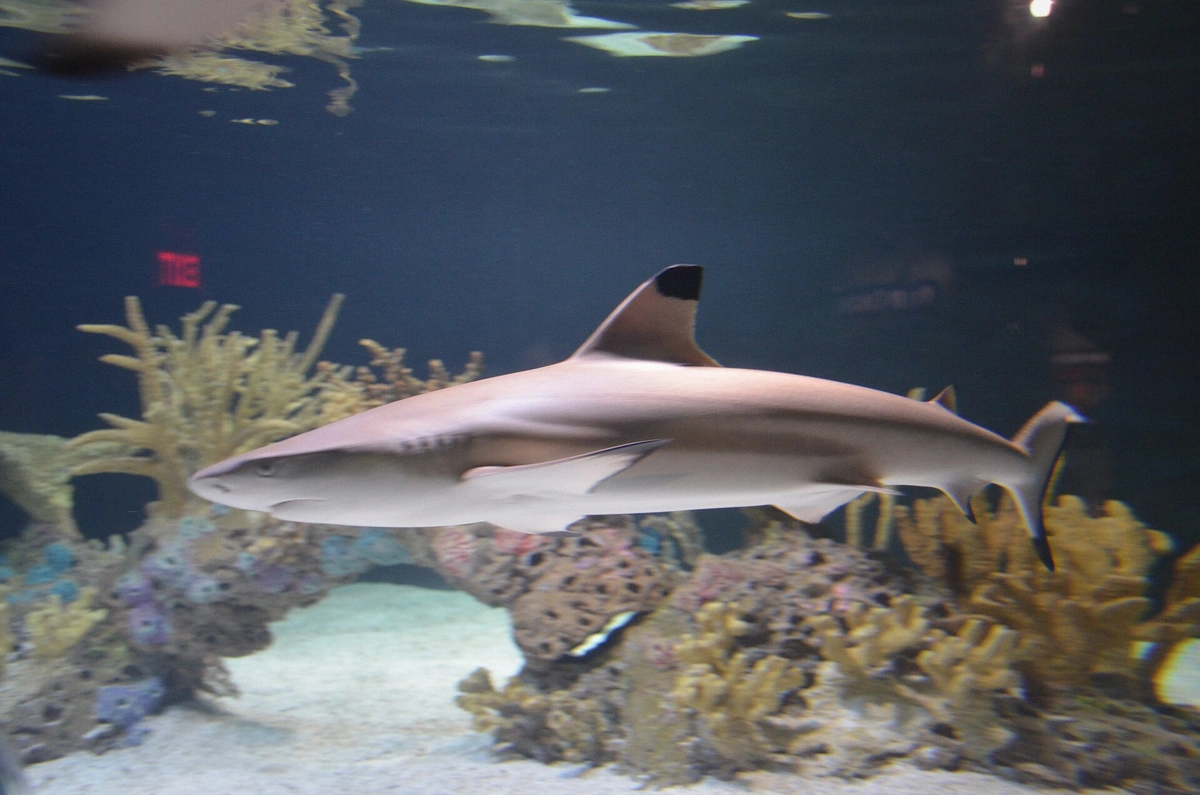
Blacktip reef shark cruising shallow water on a Bora Bora snorkeling tour, French Polynesia

The lagoon's resident shark: a blacktip reef shark on sandbar patrol - met at arm's length, never fed. Illustrative photo: Wikimedia Commons - see notes/commons-attribution.json.

How the Seven Sort: Group Size, Hulls and Hours

Strip the marketing and Lagoon Service's listings sort on three axes: how many seats the boat sells, what hull it is, and how long the water time runs. Group size runs from H2O's 7 travellers to the Vavau cruise's 16, with hard caps at maximum 8 passengers on Reef Discovery, the outrigger and the safaris uncapped on paper and small in practice. Hulls split between motorboats - fast, lively, spray-prone - and Lagoon Service's motorized outrigger, which rides the chop instead of hitting it.

Hours run 2.5 (Moana) through 4 (the two half-day safaris and the outrigger) to 3.5 for the two 5.0 half-days and 6 for the two full-days. Every booking in this comparison lands somewhere on that grid; the price table is the grid with the fares attached.

Three questions that finish the decision

Answer in order; stop when one answer disqualifies.

  • Who is swimming? Nervous or very young swimmers point at the shallow-water outrigger; confident adults open the whole field
  • What is the clock? A tender window or a spa booking pushes toward the 2.5-4 hour listings; a free day opens the full-days
  • What matters more - the deepest review base, the strictest wildlife line, or the beach lunch? Each has exactly one boat here
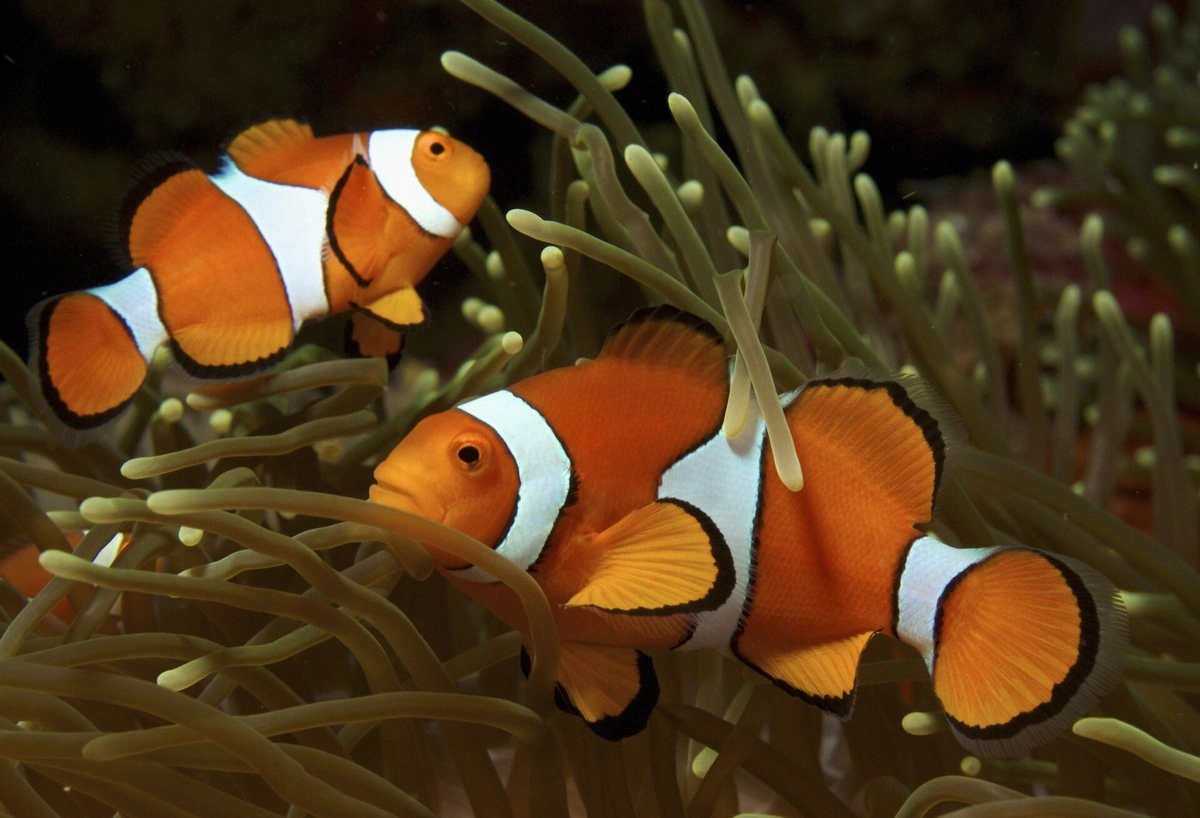
Clown anemonefish in its anemone on the coral reefs of the Bora Bora lagoon, French Polynesia

Under the surface: the gardens' residents - clown anemonefish, damsels and clams - hold every coral head. Illustrative photo: Wikimedia Commons - see notes/commons-attribution.json.

What Travellers Say About the Water

★★★★★ ★★★★★
Snorkeled in 4 different places seeing manta rays, stingrays and black tip reef sharks. Great experience.
Kim
★★★★★ ★★★★★
Stopped at 4 different spots, really knowledgeable guide, saw the coral garden, manta rays in 2 spots and eagle rays.
Miruna
★★★★★ ★★★★★
Short and sweet excursion. First stop was in shallow water to snorkel with black tip sharks and sting rays.
Kaleah
★★★★★ ★★★★★
We saw manta ray, dolphins, eagle ray, and so many beautiful corals. Highly recommend the tour and guide!
Ziwei
★★★★★ ★★★★★
Taf was a fantastic guide - attentive to all the participants, in English and French.
Steven
★★★★★ ★★★★★
Beautiful boat. Great guide who sang and played ukulele for us. Incredible multiple snorkel spots.
Barbara

Bora Bora Snorkeling Tour FAQ

What is the best snorkeling tour in Bora Bora?

On the numbers, the the Reef Discovery half-day: 5.0 across 1,034 verified reviews - the largest perfect-score base in this comparison - a maximum of 8 passengers, 3 hours 30 minutes on the water, and $137.95 with towels, fins and drinks included. Its route opens at the manta ray feeding ground before two coral gardens, and Lagoon Service's listing reports bookings averaging 81 days ahead. If a strict no-feeding wildlife policy matters more to you than review count, H2O runs the same format with 7 guests and skips every artificially-attracted site.

How much does a Bora Bora snorkeling tour cost?

The listings compared here run from $115.21 to $174.00 per person - the span covers a 2½-hour eco cruise up to a six-hour safari with a motu picnic. Half-days cluster between $130 and $138, and every listing includes mask, snorkel and fins. Prices move with the season and the date; the figures here are re-checked quarterly and the live calendar above prices your actual date.

Do you need a tour to snorkel in Bora Bora?

No - a resort house reef is a genuine snorkel, and the lagoon off the overwater bungalows is the same warm, shallow water the boats sail. What a tour adds is the grounds a shore cannot reach: the ray sandbars, the blacktip reef shark shallows, the manta channel and the offshore coral gardens. The full argument, with costs, is in the house reef versus boat comparison.

When is the best time to snorkel in Bora Bora?

May to October - the dry, trade-wind season - brings the clearest water and the most reliable departures, with June to September the busiest on the boats. The lagoon has no closed season: water holds 26-29 °C all year and the wet-season showers pass quickly. Within any day, morning departures run the calmest water. The month-by-month season guide carries the full table.

Are there sharks in the Bora Bora lagoon?

Yes - blacktip reef sharks are a standard sight on the shallow sandbars, and lemon sharks pass deeper sites. Both are shy, unaggressive species in this setting, and the encounters happen in knee-deep to chest-deep water under a guide's supervision. Feeding them has been illegal in French Polynesia since October 2017, which keeps the encounters on the animals' terms. The species-by-species breakdown is in the shark and stingray swimming guide.

Can cruise passengers snorkel in Bora Bora?

Yes - ships anchor off Vaitape, the main village, and every operator in this comparison runs pickup from the pier. The Moana eco cruise (2 h 30 min) and the half-day safaris fit a tender window comfortably; the Vavau cruise starts around 9:00 am and states cruise passengers are welcome, and its crew meets boats at the pier. One rule to note: Lagoon Service's listing says refunds will not cover a missed trip due to the ship's late or non-arrival - ships' excursions carry their own guarantee.

Which snorkel tour is best for kids or nervous swimmers?

The the Lagoon Service outrigger is the gentlest platform here - a steadier motorized outrigger, three shallow-water stops, life vests and beach towels included, and 100% of its English-speaking reviewers scored it perfect. The the Moana eco cruise starts knee-deep on sand among the stingrays and blacktips before its coral-garden stop, which suits first-time snorkellers. Both keep boats small and both crews brief water rules before anyone enters.

How far ahead should I book a Bora Bora snorkeling tour?

Earlier than you would expect: the most-reviewed listings report bookings averaging 46 and 81 days in advance, and peak-season June-September dates go first. Every listing carries free cancellation up to 24 hours before departure, so the rational play is to book the boat you want as soon as your flights are fixed and re-check the live availability closer to the date - a reservation costs nothing today on the GYG listings' reserve-now-pay-later terms.

The lagoon's boats, one table - pick the day that matches your water.

Check Availability
Tours from $115.21 Check Availability